
CleverQA
Monitoring that turns every alert into a diagnosed defect.
The problem
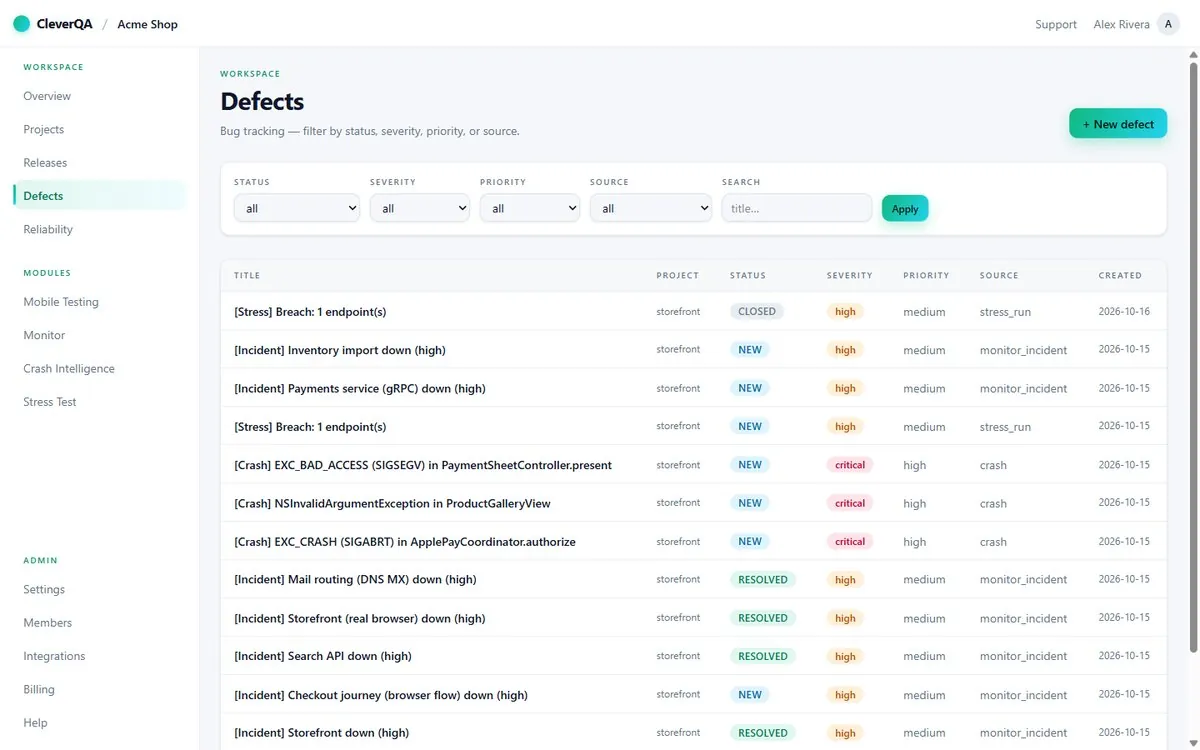
Small teams find out about outages from their users. One failure fires three alerts, crash reports pile up as thousands of duplicates, and the graphs never say what actually broke. Clementina Enterprises wanted one product that watches everything, names the likely cause and hands the team a defect they can act on, for teams that have no dedicated reliability engineer.
Constraints
Built for teams with no reliability engineer: set up in minutes, readable without training. The AI is never on the alert path; if it fails, the alert and the defect still go out. Thin evidence gets a low-confidence answer, never a confident guess. It works with the crash reporters and issue trackers teams already use.
Architecture
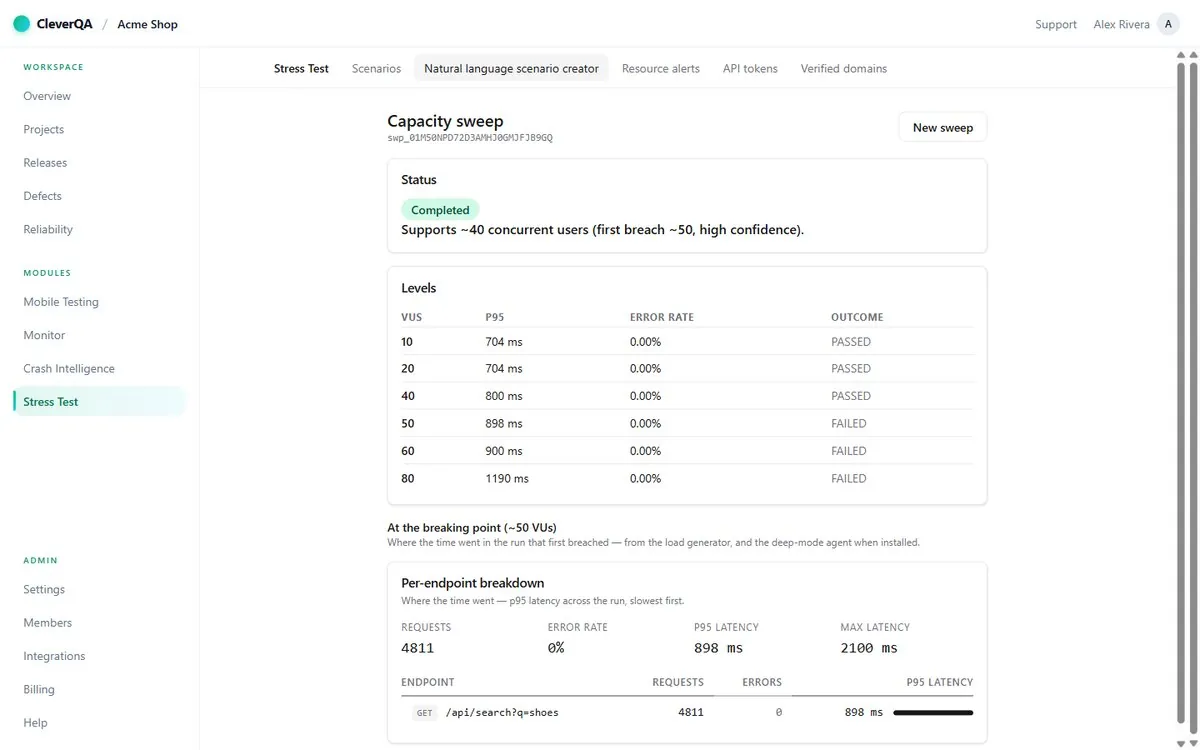
- 01 SIGNALS Monitors, crashes, server load, releases
- 02 DETECTION A check fails or crashes spike
- 03 GROUPING Duplicates fold into one defect
- 04 CORRELATION Linked to the release that shipped it
- 05 AI DIAGNOSIS Likely cause, fix and confidence
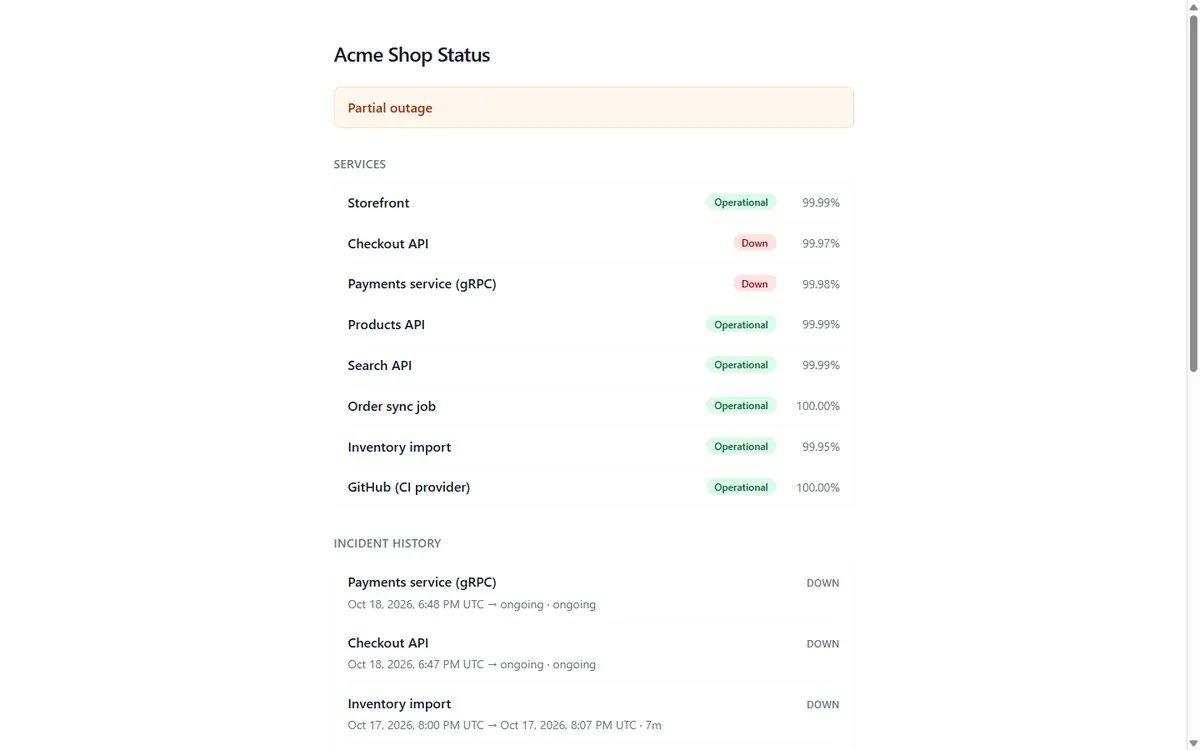
- 06 ALERTING The right person paged, status page updated
- 07 TRACKED DEFECT One click to the team’s issue tracker
- CLIENT
- Web dashboard and status pages
- API
- Monitoring and defect platform
- MODELS + STORAGE
- Language model · evidence store
FIG. 1 Failure pipeline. Teal marks where the AI reads the captured evidence and writes the likely cause that is attached to the defect.
What we built
AI inside
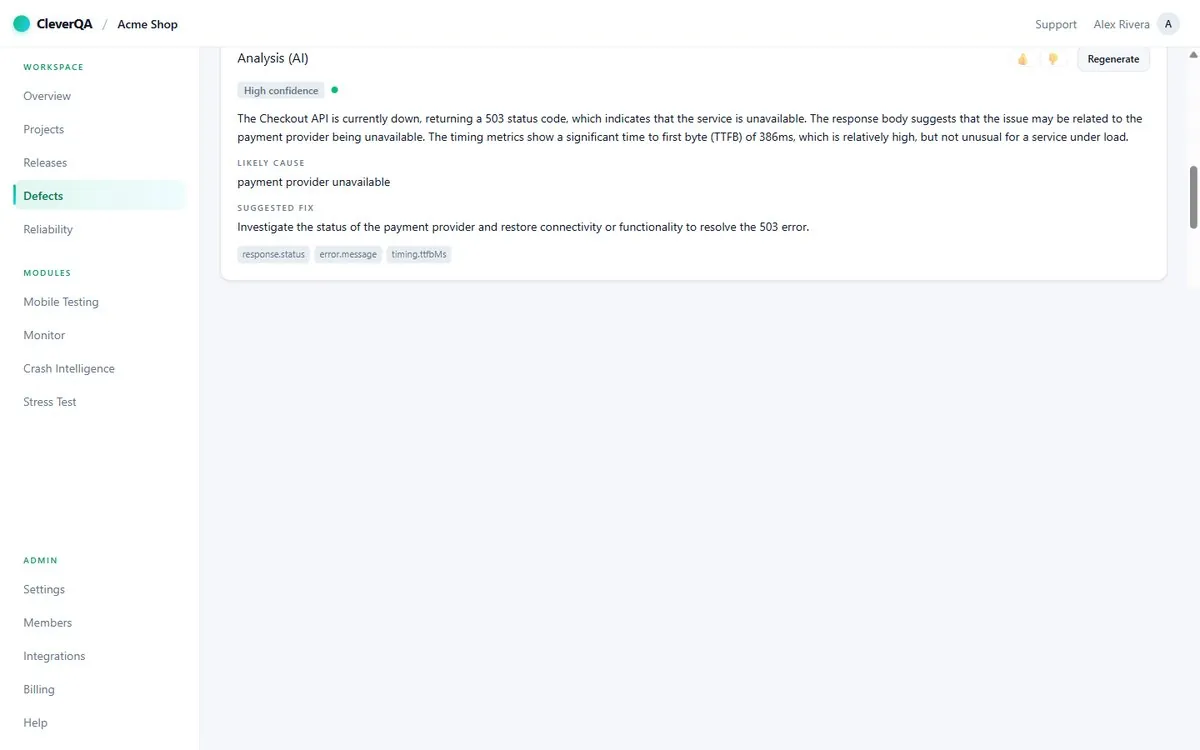
When something breaks, CleverQA keeps the evidence from the moment of failure. A language model reads it and writes the likely cause, a suggested fix and how sure it is. When the evidence is thin it says so and holds back the fix. It also maps what else the failure touched and drafts the postmortem once the incident is resolved.
End to end
- Product concept B7DEV
- UI and UX design B7DEV
- Web app and status pages B7DEV
- Server side B7DEV
- DevOps B7DEV
- AI diagnosis B7DEV
- Integrations B7DEV
Results
Live at cleverqa.com, with self-serve signup since August 2026. Every failure arrives as one defect with a likely cause attached, not a stack of alerts. Status pages, escalation, crash grouping and issue-tracker push are shipped and working.
Building something similar?
20 minutes, no slides, an honest opinion even if you don't hire us.